
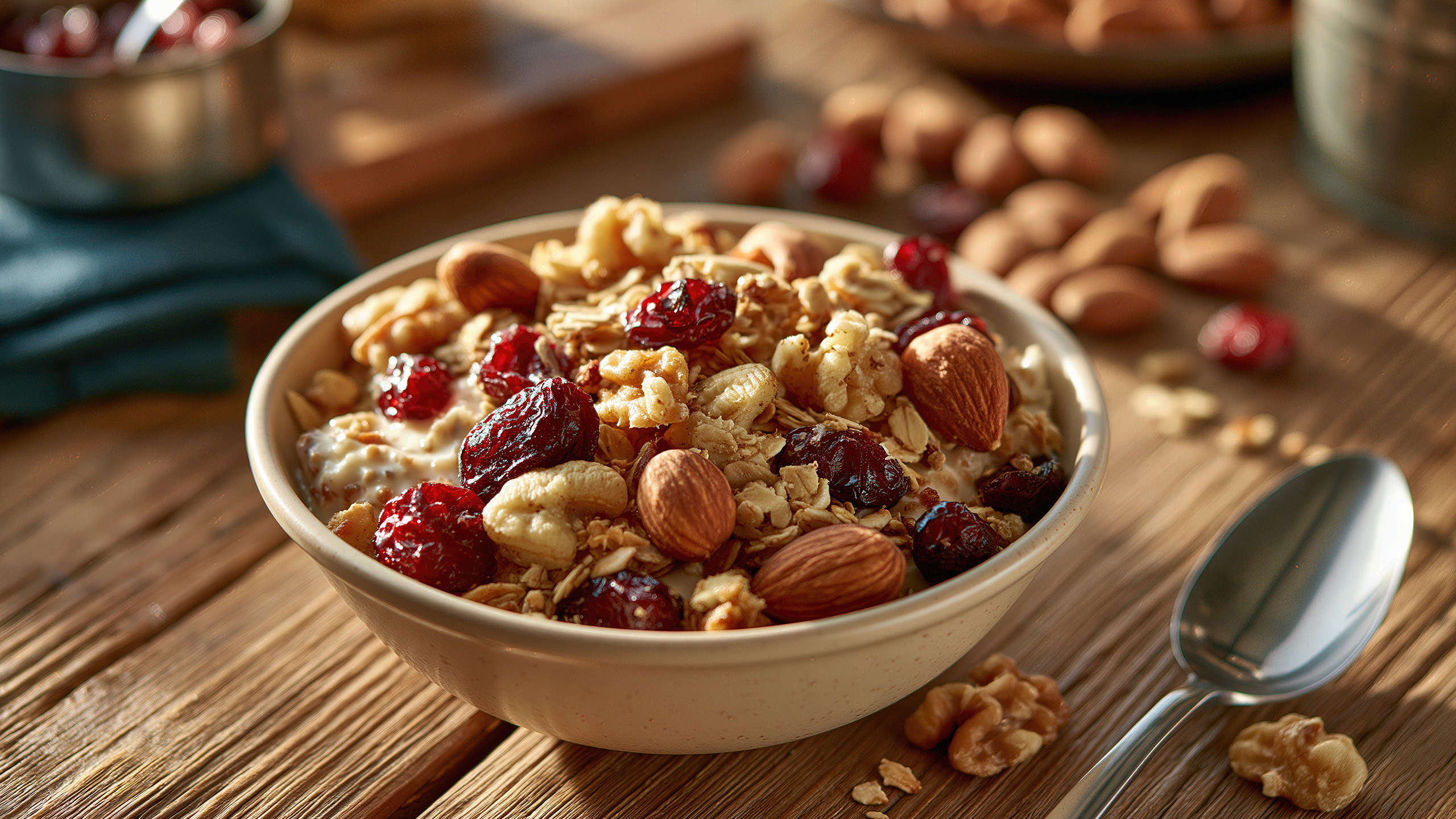
A first-time founder with a small-batch granola recipe, a home kitchen production routine, and a plan to build a premium brand sold through farmers markets, specialty grocers, and a direct-to-consumer site. The product line centered on oat-based clusters with nuts, seeds, and dried fruit.
This case study is based on a real client engagement. Specific identifying details have been removed or generalized to protect confidentiality.
Client name withheld under NDA.
The Challenge
The U.S. granola category is crowded. National brands dominate shelf space, while regional producers compete on craft positioning, clean labels, and flavor novelty. Wholesale prices for specialty granola typically sit between $6 and $9 per 11-ounce equivalent, with retail prices of $9 to $14. New boutique brands often fail for reasons that have little to do with taste. They overbuild SKU counts before demand is proven, misprice against true willingness to pay, lose consistency when they leave the home kitchen, and spend scarce capital on advertising that does not convert.
The founder entered with three constraints. Capital was limited and needed to cover co-packer deposits, packaging, insurance, and an initial ingredient buy. The recipe that won early farmers-market praise had never been specified for commercial bake times, moisture targets, or cluster-size distributions. There was no reliable view of which flavors, pack sizes, or channels would support a premium price without discounting. A single poorly forecasted production run can consume months of cash.
The objective was a focused boutique brand with a defensible product architecture, a price that held, consistent small-batch production, and a plan that reached contribution-positive operations without a large marketing budget.
The Approach
Neo Artificial Intelligence partnered with the founder to design and execute a sequenced Applied AI program across recipe industrialization, assortment and pricing, production planning, and channel execution. The work combined sensory and cost modeling, demand sensing, computer vision for bake consistency, and a lean operating model suited to output measured in hundreds of pounds rather than millions of cases.
Wave 1. Product Architecture and Recipe Industrialization
The starting point was the founder’s original formula and informal tasting notes from early customers. Neo Artificial Intelligence structured those inputs into a measurable specification: target cluster ratio, moisture range, sweetness intensity, nut-to-oat balance, allergen constraints, and claimed nutrition bands. Machine-learning models evaluated ingredient substitutions and bake profiles against cost, texture, shelf-life risk, and label claims.
The models processed specialty-food purchase patterns, competitor ingredient decks, and the founder’s batch logs. Rather than generating novelty for its own sake, the system ranked a small number of commercially viable variants. Three hero SKUs advanced: a classic maple pecan, a cocoa almond sea salt, and a seed-forward olive oil cluster with lower added sugar. Two limited flavors were reserved for seasonal drops.
Computer-vision inspection on pilot bakes scored color, cluster size, and scorch risk against a digital standard. First commercial batches met the sensory standard on the second production run. Ingredient cost per retail-ready pound fell 14 percent. Predicted shelf life improved from an uneven 10 to 12 weeks to a documented 16-week window under specified packaging.
Wave 2. Assortment, Pricing, and Offer Design
A willingness-to-pay model combined specialty-retail scanner analogs, survey responses from 1,260 frequent premium-breakfast buyers, and search and social language around small-batch clusters and gift boxes. Reinforcement-learning tests on early direct-to-consumer traffic refined pack architecture.
The offer stayed narrow. The core line used three year-round SKUs in an 11-ounce pouch and a 2-pound pantry bag. A three-pouch gift set and a quarterly subscription became the margin engines. List pricing locked at $12.50 for the 11-ounce pouch and $32 for the pantry bag, with a subscription discount limited to 10 percent. Wholesale protected a 40 percent retailer margin while leaving the brand a gross margin above 52 percent after co-packer fees and packaging.
The model identified households already paying a premium for yogurt, specialty coffee, and bakery items who treated granola as a finishing ingredient rather than a commodity cereal. Messaging shifted from generic healthy-breakfast language to use occasions, texture claims, and ingredient provenance, which improved advertised conversion.
Wave 3. Production, Inventory, and Channel Execution
Demand-sensing models ingested website orders, market-day sell-through, wholesale sell-in, holiday seasonality, and external signals such as weather and promotional calendars in adjacent categories. Forecasts refreshed twice weekly in the first two quarters.
Production moved from opportunistic weekend bakes to scheduled co-packer slots with minimum-order discipline. Inventory policy targeted 5 to 7 weeks of cover on hero SKUs and a tighter window on seasonal flavors. Waste from overbaked product, stale returns, and unsold market leftovers declined once quantities followed the forecast rather than founder intuition.
Go-to-market execution stayed selective. The brand prioritized independent grocers, two regional specialty chains, café accounts, and the owned site. Store-level sell-through predictions helped the founder decline accounts that required unsustainable slotting. On the owned channel, look-alike modeling focused on yogurt topping, desk snack, and gift occasions. Subscriptions were offered only after a second purchase.
Supporting elements included a value-tracking dashboard, a weekly demand and quality review, and documented co-packer specifications.
Results (16 Months)
| Metric | Result |
|---|---|
| Time to first profitable month | Month 11 |
| Gross margin | 54% |
| Contribution margin after variable marketing | Positive from month 9 |
| Direct-to-consumer repeat rate (90 days) | 38% |
| Subscription share of owned-channel revenue | 29% |
| Specialty accounts active | 61 |
| Inventory waste | Down 44% from first-quarter baseline |
| Average realized price versus list | Within 4% |
By month 16 the company was no longer a market-table experiment. It had a stable core assortment, a co-packer relationship running to specification, specialty distribution that reordered on velocity rather than founder persuasion, and an owned channel that funded a growing share of production.
Key Success Factors
-
- A narrow product line chosen by modeled demand and cost, not by the temptation to launch every flavor that tasted good in a test kitchen.
- Price architecture set from willingness to pay and unit economics before the first wholesale catalog was printed, then held without habitual discounting.
- Recipe industrialization treated as an operations problem, with computer vision and documented specs transferring quality from the founder’s kitchen to a co-packer.
- Channel selection based on predicted velocity and margin, which kept working capital out of accounts that looked prestigious but would not pay back.
- A lightweight operating cadence so forecasts, quality checks, and cash tracking lived in one rhythm.
Implications
Boutique food brands often treat artificial intelligence as a marketing add-on or a future luxury. This engagement shows a more useful starting point. Applied AI can compress the most expensive early mistakes in specialty food: too many SKUs, a price that cannot support small-batch costs, a recipe that does not survive scale, and inventory that dies on the shelf. For founders, the advantage is a sequenced set of high-ROI use cases that connect product, price, production, and channel decisions to measured outcomes.
Leadership teams evaluating similar launches can treat this case as a reference for building a specialty brand with scarce capital. Begin with a specification the factory can run. Price from evidence rather than from neighboring bags on the shelf. Forecast in short cycles. Grow distribution only where velocity and margin both clear the hurdle. Used that way, Applied Artificial Intelligence is an operating system for turning a good recipe into a durable company.
For more information about how our work in Applied Artificial Intelligence can help you, please contact us HERE.